
A competitor's current website tells you where they are. Their archived website tells you how they got there: which prices they tried and abandoned, which messages they tested, which product lines they quietly dropped, and which pages they built when their traffic took off. All of it is public, in web archives, for anyone who looks.
What to look at, and what it reveals
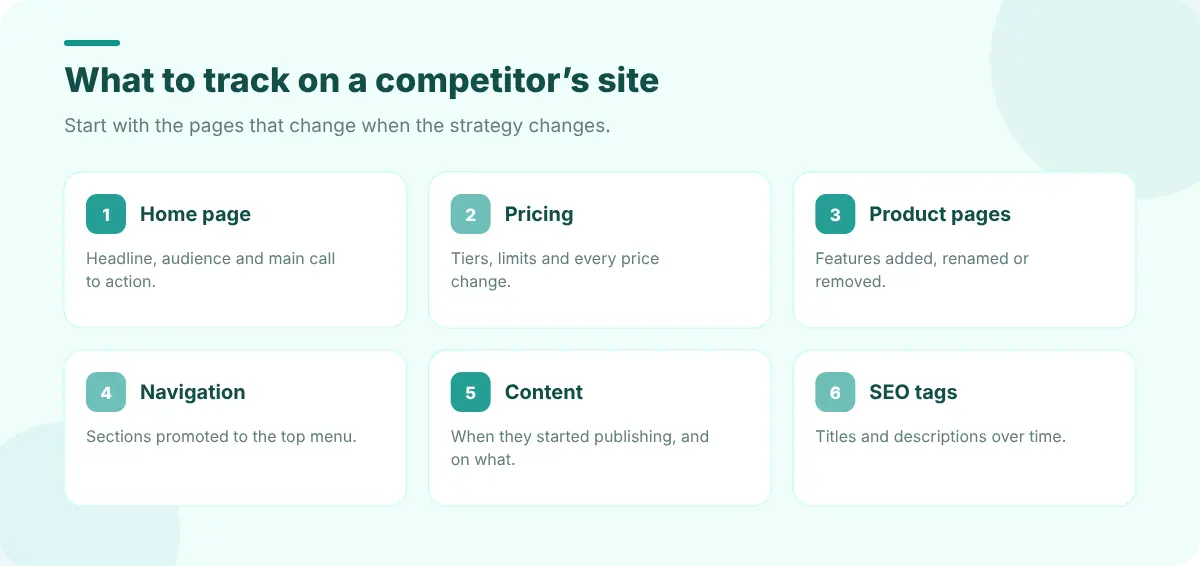
| Page | Questions to ask over time |
|---|---|
| Home page | Who is the headline for? What's the main call to action? When did it change? |
| Pricing | How many tiers? What moved between plans? When did prices rise, and by how much? |
| Product and feature pages | What was added, renamed or removed? |
| Navigation | Which sections were promoted to the top menu, and when? |
| Blog and resources | When did they start publishing, and on which topics? |
| Titles and descriptions | Which keywords were they targeting, and did that change? |
Step 1: Build a timeline of the key pages
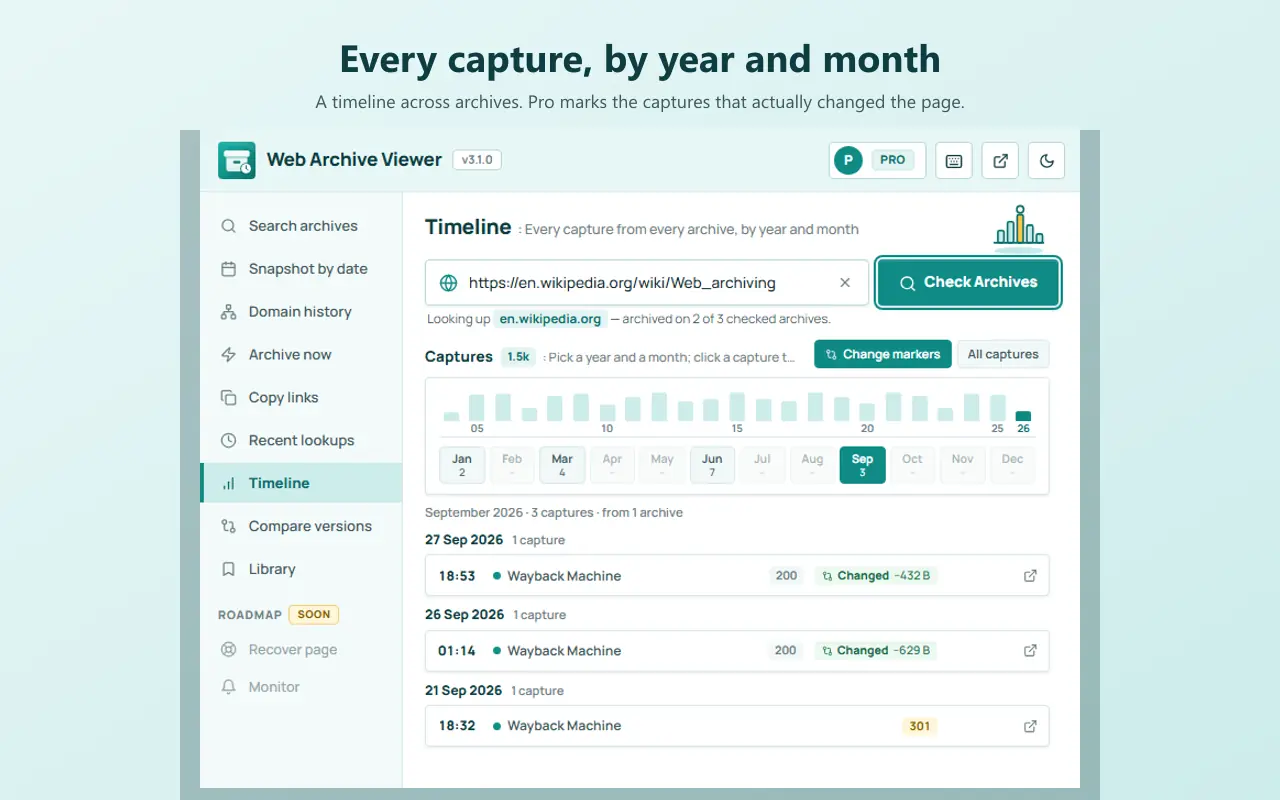
Pick five to ten pages that matter and look at captures across the years. The Wayback Machine calendar shows captures by date; Web Archive Viewer's Timeline shows every capture by year, month and day across the archives it can query, and with Pro it marks the captures where the content actually changed, so you can skip identical copies.
Step 2: Compare versions to see what changed
Open two captures side by side and note the differences in headline, pricing and calls to action. For long pages, a text diff is much faster than reading. Our guide to comparing two versions of a web page covers side-by-side, text and visual comparison.
Step 3: Track their SEO over time
Titles, meta descriptions and headings show which search terms a competitor was chasing. Comparing them across captures often explains a jump or a drop in their visibility. Web Archive Viewer's Pro SEO & changes tool reads title, description, canonical, headings and word and link counts across up to twelve captures of a URL; the free method is described in historical SEO analysis with the Wayback Machine.
To check what their live pages send today, Web Developer Tools' guide to checking meta tags and Open Graph shows how to read every tag on the current page.
Step 4: Map their site structure
Listing every archived URL under a competitor's domain shows when sections appeared: a /blog/ in 2019, /integrations/ in 2021, /enterprise/ in 2023. That sequence is their strategy, written in URLs. See how to find every archived URL on a domain.
Turn findings into decisions
- Pricing experiments: if they tried a cheaper tier and removed it within months, ask why before you try the same thing.
- Messaging: headlines that lasted for years are probably working; ones that changed every quarter probably weren't.
- Content gaps: topics they covered early and abandoned may be open to you.
- Timing: line up their changes with public events (funding rounds, launches) to understand cause and effect.
FAQ
Can I see a competitor's old pricing?
Usually, yes. Look up their pricing page in the Wayback Machine or another archive and open captures from different dates. Prices loaded by JavaScript may not appear in every capture.
Is it legal to look at a competitor's archived website?
Viewing publicly archived pages is generally fine and widely done. Copying their content or design is a different matter; use what you learn, not what they wrote.
How far back can I go?
Up to 1996 for some sites. How far back you can see depends on when the site launched and how often archives captured it.